
FRACTIONAL BACK OFFICE
FINANCIAL REPORTING
Reports You Can Actually Use
A profit and loss statement is important. So is a balance sheet. But handing an owner two reports without context does not automatically create clarity.
Fractional Back Office helps organize financial reporting around the questions a business owner actually needs to answer: What changed? Where is the money going? Is performance improving? What needs attention? And what should we look at next month?
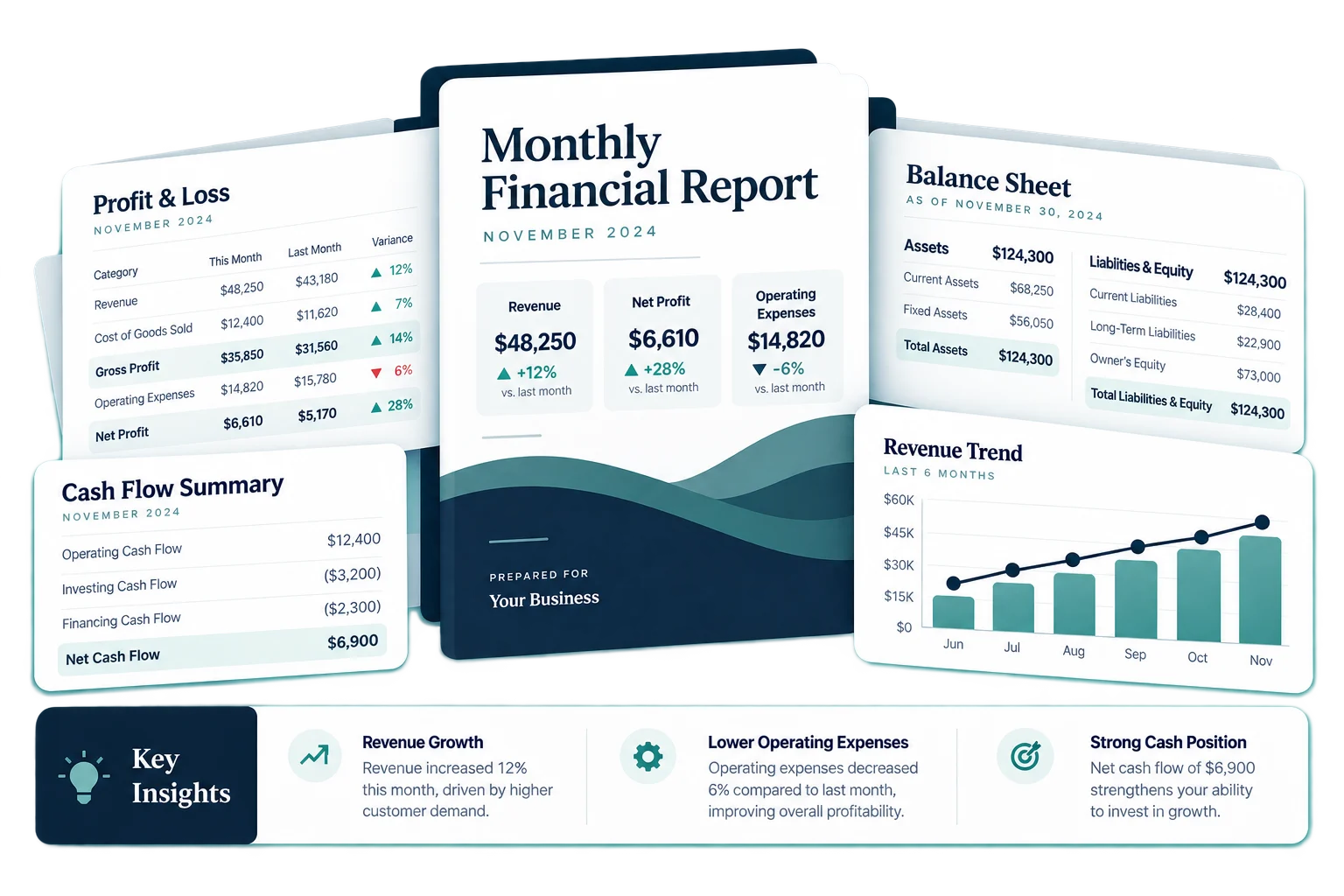
Core Financial Statements
Depending on the engagement and the quality of the underlying books, recurring reporting may include the core financial statements used to understand the business from different angles.
From Statements to Business Insight
The next level is making the reports easier to interpret. Where appropriate, we can organize comparative information, trend views, selected ratios, budget-versus-actual comparisons, and management summaries around the areas most relevant to your business.
The objective is not to overload you with financial metrics. It is to highlight the information that helps you understand what changed and where a closer look may be useful.
- Month-over-month and year-over-year comparisons.
- Revenue and expense trends.
- Gross margin or service-margin trends when the bookkeeping structure supports them.
- Accounts receivable and accounts payable visibility when those processes are in scope.
- Cash position and selected balance-sheet movement.
- Owner-defined metrics that connect financial results to operations.
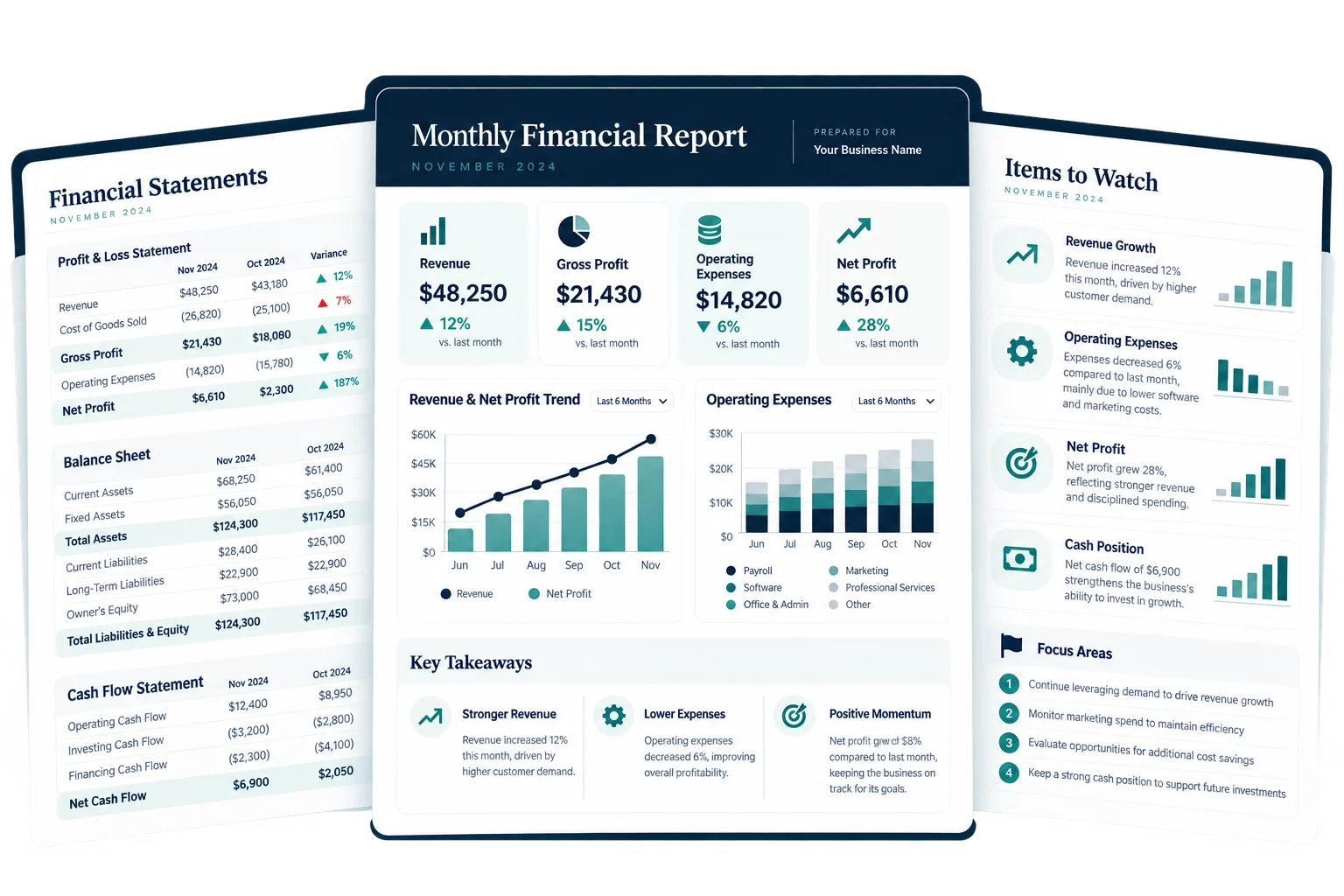
A Monthly Reporting Package Can Be Simple
You do not need a 30-page finance deck to understand a small business. In many cases, a concise reporting package is more useful: a few reliable statements, a small set of comparisons, and a summary of the items that deserve attention.
As the business grows, the reporting can grow with it. The structure should support better decisions, not create another administrative burden.
Reporting Depends on Reliable Data
Financial reports are only as dependable as the underlying bookkeeping. If accounts are unreconciled or historical transactions are inconsistent, the first recommendation may be to correct the books before relying on more advanced reporting.
That is one advantage of connecting bookkeeping and reporting within the same back-office framework: problems in the source data can be addressed before they become polished charts with misleading conclusions.