
FRACTIONAL BACK OFFICE
CATCH-UP BOOKKEEPING
Behind on the Books? Start With a Plan.
Falling behind on bookkeeping is common. A busy season turns into several busy months, an employee leaves, a system changes, or the owner simply has more urgent work to do. The important thing is not how the backlog happened — it is creating a structured path to get current.
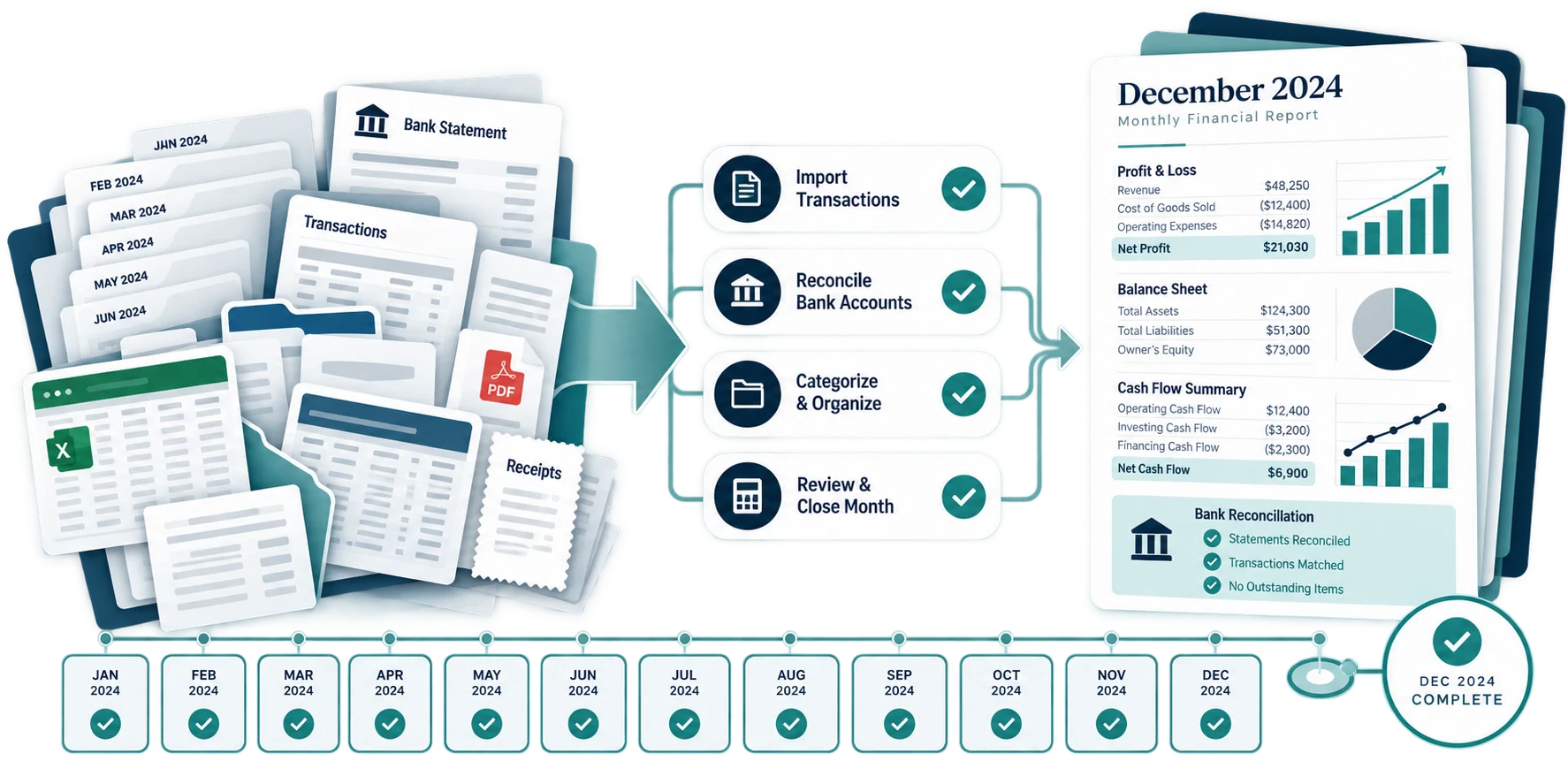
Catch-up bookkeeping is designed to organize historical financial activity, reconcile accounts, resolve obvious inconsistencies, and bring the books forward to an agreed current period.
What We Do First
Catch-up work begins with an assessment. Before making broad changes, we need to understand what exists, where the last reliable period ends, and which accounts or records are incomplete.
- Review the current bookkeeping file and available historical records.
- Identify the period that needs to be caught up or reconstructed.
- Confirm bank, credit-card, loan, and other relevant accounts.
- Identify missing statements, uncategorized activity, unreconciled accounts, or balance issues.
- Define the catch-up scope and establish a practical work plan.
The Catch-Up Process
- Collect the available statements and supporting information for the catch-up period.
- Enter, import, review, or correct historical transactions as appropriate.
- Apply consistent categorization and account mapping.
- Reconcile applicable financial accounts month by month.
- Investigate discrepancies that can reasonably be resolved from the available records.
- Document unresolved questions that require owner, CPA, lender, payroll, or other third-party input.
- Complete the agreed catch-up period and establish a clearer starting point for ongoing bookkeeping.
What Catch-Up Bookkeeping Can Fix — and What It Cannot
Catch-up bookkeeping can resolve many common recordkeeping problems, but it cannot recreate information that no longer exists or independently determine the tax treatment of every historical transaction. When records are incomplete, we will identify what is missing and work with the information that can reasonably be supported.
If an issue requires tax, legal, payroll, valuation, or audit expertise outside the bookkeeping scope, we may recommend that you involve the appropriate professional.
What We May Need From You
- Bank and credit-card statements for the affected period.
- Access to the accounting system through a secure user invitation when available.
- Loan, financing, merchant-processing, and payment-platform statements when relevant.
- Payroll summaries or reports when payroll activity affects the books.
- Prior tax returns or accountant-provided year-end entries when needed to establish opening balances.
- Answers to transaction questions that cannot be resolved from the records alone.
What Happens After the Books Are Current?
Once the catch-up period is complete, you can decide how you want to maintain the progress. Some businesses transition into monthly bookkeeping. Others need a reporting package, a dashboard, or a better internal workflow so the backlog is less likely to happen again.
The goal is not simply to clean up yesterday. It is to leave you with a better foundation for tomorrow.