FRACTIONAL BACK OFFICE

FREQUENTLY ASKED QUESTIONS

Straightforward Answers Before We Talk

Every business is different, but many owners have the same questions before deciding whether outsourced back-office support is the right fit. These answers explain how we generally work. Your final scope, responsibilities, pricing, and deliverables will be documented in a written service agreement.
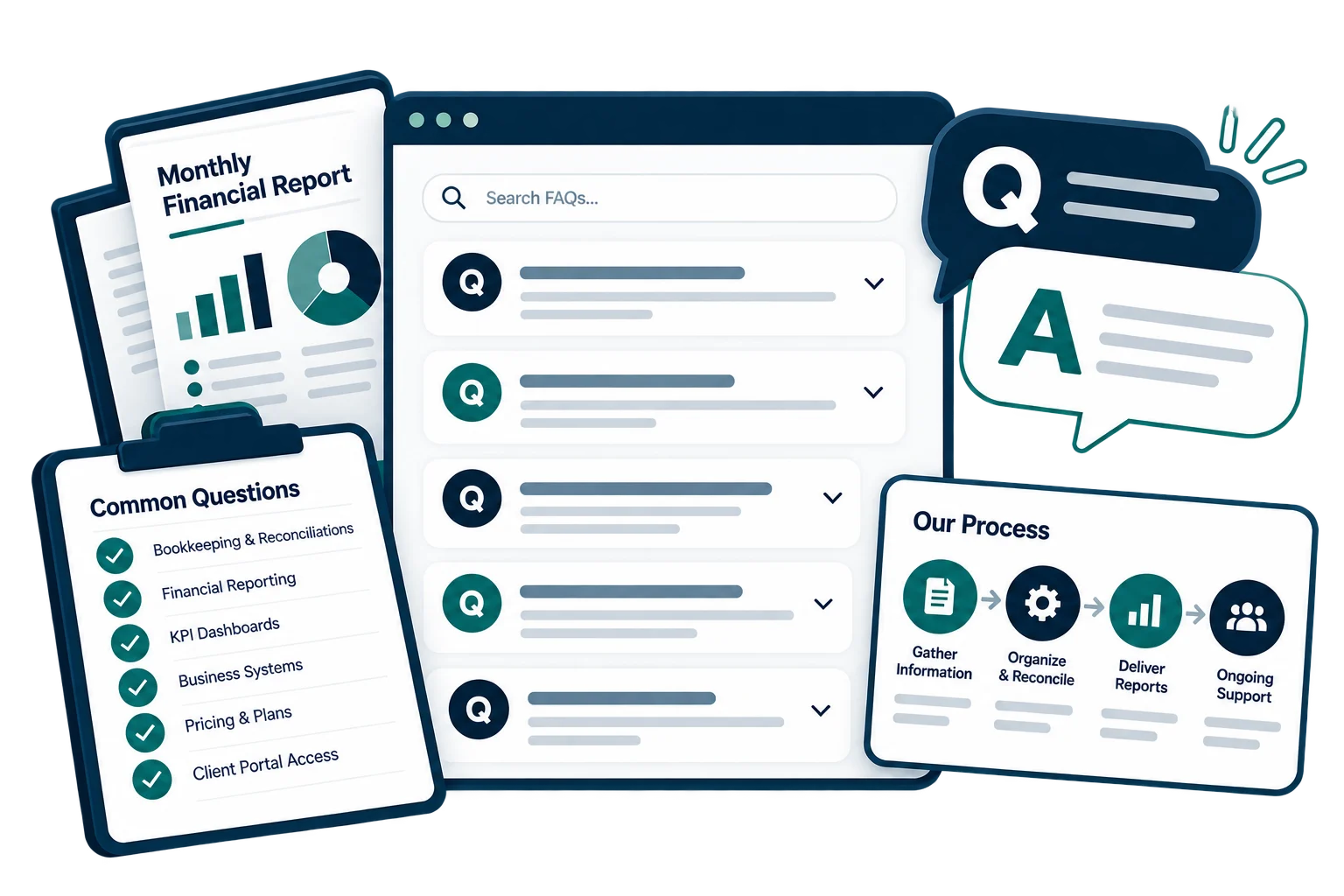

Answers to Common Questions

What is a fractional back office?

A fractional back office gives a business access to selected financial and administrative capabilities without building a full internal department. Depending on the engagement, that may include bookkeeping, reporting, KPI dashboards, workflow organization, and other back-office systems.

Do you replace my CPA?

No. We can work alongside your CPA or tax professional. Bookkeeping and reporting support are different from tax preparation, audit, legal advice, and other licensed professional services.

Do you only provide bookkeeping?

No. Bookkeeping is a core service, but Fractional Back Office can also support financial reporting, KPI dashboards, business systems, workflow organization, and practical automation.

Can you help if my books are behind?

Yes. Catch-up bookkeeping begins with an assessment of what exists, which periods are incomplete, which accounts need reconciliation, and what records are available.

What accounting software do you work with?

We primarily expect to work with modern cloud-based accounting and business tools, with QuickBooks Online often being a practical fit for small businesses. The right platform depends on the engagement and existing systems.

Do you work remotely?

Yes. Many bookkeeping, reporting, dashboard, and systems engagements can be handled remotely using secure cloud-based tools and role-based access.

How does pricing work?

Pricing depends on the scope, complexity, transaction volume, condition of the records, number of systems involved, and level of ongoing support required. We define the work before providing a proposal.

Can you prepare my taxes?

Fractional Back Office is not positioned as a tax-preparation firm unless a separate written engagement explicitly states otherwise. Tax filing and individualized tax advice should be handled by a qualified professional.

Can you handle payroll, bill pay, accounts receivable, or accounts payable?

Those workflows can be discussed during scoping. Some businesses need coordination, reporting, or process support rather than full transaction processing. Responsibilities are defined clearly in the service agreement.

What is a KPI dashboard?

A KPI dashboard brings selected performance measures into one view so you can monitor important changes without digging through multiple reports. The right KPIs depend on the business model, goals, and reliability of the source data.

Can you automate parts of my back office?

Often, yes. We can evaluate repetitive workflows, information handoffs, reminders, spreadsheet processes, and connected tools to see where practical automation could save time or reduce errors.

How long does onboarding take?

The timeline depends on scope and the condition of existing records. A clean monthly-bookkeeping transition can move faster than a multi-year catch-up project or a systems engagement involving several data sources.

What will you need from me?

Usually, secure access to the agreed systems, relevant statements or exports, answers to transaction questions, and a point of contact who can make decisions when something needs clarification.

How do you protect business information?

We use commercially reasonable administrative and technical practices and prefer secure, user-based access to cloud systems when available. Specific controls depend on the platforms used in the engagement.

Do I have to sign a long-term contract?

The service agreement will state the engagement term, billing arrangement, and cancellation provisions. We aim to make those terms clear before work begins.

Can I start with one service and add others later?

Yes. Many businesses begin with the most immediate problem — such as bookkeeping or catch-up work — and add reporting, dashboards, or systems improvements later if they become useful.

What happens on the discovery call?

We talk about your business, the current back-office process, what is causing frustration or uncertainty, and what you would like to improve. The goal is to determine fit and the most useful next step.

READY TO MOVE FORWARD?

Still Have a Question?

If your situation does not fit neatly into one of the answers above, send us a message or schedule a discovery call. A short conversation is often the easiest way to determine what information we need next.